

🔍 What Is an Epidermoid Cyst (Atheroma)? A Guide to Receiving Treatment with Confidence
Are any of these concerns familiar to you?

"There's a firm lump beneath my skin…"
"I thought it was just acne and left it alone, but it keeps getting bigger…"
"It's tender to the touch and it's turned red and swollen…"

⚠️ That could be an epidermoid cyst (atheroma)!

An epidermoid cyst does not heal on its own, and if left untreated, it can become inflamed and swell to two or three times its original size — a troublesome benign tumor [1,2].

🏥 There is no need to worry, however! At our clinic, treatment can be completed with a same-day procedure lasting as little as 5 to 20 minutes, and it is covered by national health insurance ✨
📖 What you will learn from this article:

✅ What is an epidermoid cyst? Causes and symptoms
✅ How to tell it apart from acne and lipomas
✅ What happens if you try to pop it yourself (absolutely do not do this!)
✅ Surgical methods, costs, and insurance coverage
✅ Treatment approaches that aim to minimize scarring
💡 What Is an Epidermoid Cyst (Atheroma)? Symptoms and Causes
An epidermoid cyst is a benign tumor that develops when dead skin cells, sebum, and other waste products accumulate beneath the skin [1,6,7].

A sac-like pocket forms inside the skin, trapping waste materials that would normally be shed from the body.

📌 Three key characteristics of epidermoid cysts:

(1)Early symptoms are often difficult to notice 😓
(2)There is a risk of inflammation 🔥
(3)Easily mistaken for a skin lump or acne 🤔

Let's also look at the causes and common characteristics of people who tend to develop them 👇

👉 What Is an Atheroma (Epidermoid Cyst)? Causes, Symptoms, and Treatments Explained by a Dermatologist
👉 A Comprehensive Guide to Treating Inflamed Epidermoid Cysts in Tokyo (Ueno)

😓 Characteristic ① Early symptoms are often difficult to notice
Early symptoms of an epidermoid cyst typically present only as a small lump beneath the skin, with little to no visible change on the skin surface, making it easy to go unnoticed.

The sac starts out very small, but because the keratin and sebum inside cannot escape, they continue to accumulate and the cyst gradually grows larger 📈

👉 For more information on early symptoms:
・Are There Early Symptoms of an Epidermoid Cyst? Early Detection and the Right Course of Action
・What Are the Early Symptoms of an Epidermoid Cyst? How to Identify It, the Risks of Leaving It Untreated, and Which Department to Visit
・Found a Small Epidermoid Cyst? The Case for Early Detection and Early Treatment
🔥 Characteristic ② Risk of inflammation
An epidermoid cyst has a small opening through which bacteria can enter, potentially causing infection.

When infected and inflamed, the cyst is referred to as an "inflamed epidermoid cyst," which is commonly accompanied by symptoms such as pain, a sensation of warmth, and redness 😰

In some cases, prompt drainage surgery may be required to release the accumulated pus.

👉 For more information on managing inflammation:
・Red and Inflamed Epidermoid Cyst — Warning Signs and the Right Steps to Take, Explained by a Specialist
・Can't Sleep Due to Epidermoid Cyst Pain? Managing Inflammation and Knowing When to Seek Treatment
🤔 Characteristic ③ Easily mistaken for a skin lump or acne
Epidermoid cysts are often assumed to be ordinary skin lumps or pimples, and tend to be left untreated by people who believe they will heal on their own.

⚠️ In reality, they rarely resolve by themselves. In many cases, people only recognize the condition as an epidermoid cyst after it has gradually grown larger and developed inflammation or become infected.

👉 What Is an Epidermoid Cyst (Atheroma)? A Complete Guide to Causes, Symptoms, and Treatment
❓ Why Do Epidermoid Cysts Form? Understanding the Causes
In most cases, the direct cause of an epidermoid cyst is not yet fully understood [8,18].

It is thought that dead skin cells accumulate inside the skin due to some trigger, and the surrounding skin then develops into a sac-like structure beneath the surface.

In rare cases, cysts may also develop following trauma, a blocked hair follicle, or a viral infection.

💡 Since the cause is not clearly established, there is no definitive way to prevent them.

Epidermoid cysts rarely resolve on their own, and many people notice them only after they have gradually grown in size.

👀 We encourage periodic self-checks of areas that are easy to overlook — such as the back of the neck and the back — to help with early detection!

👉 The Relationship Between Epidermoid Cysts and Stress: Causes of Skin Lumps and How to Address Them
👤 Who Is More Likely to Develop Epidermoid Cysts?
While there is no known genetic factor involved, certain tendencies have been observed in people who develop them more frequently.

⚠️ For example:
・People who have a habit of popping pimples
・People who forcefully squeeze clogged pores

→ These habits can create entry points for bacteria, which may contribute to the formation of epidermoid cysts 💦

🛁 Regular bathing and a consistent skincare routine can help keep skin clean and less prone to acne-related issues!

👉 For more information:
・Who Is Prone to Epidermoid Cysts: Characteristics and Causes Explained in Detail
・Epidermoid Cysts and Daily Life: Key Points to Watch Out For and Prevention Tips
🔬 How to Distinguish an Epidermoid Cyst from Other Conditions
Epidermoid cysts have characteristics that differ from acne [9,10]. They also share similarities with lipomas, which can cause confusion.

👇 Check the differences between epidermoid cysts, acne, and lipomas!
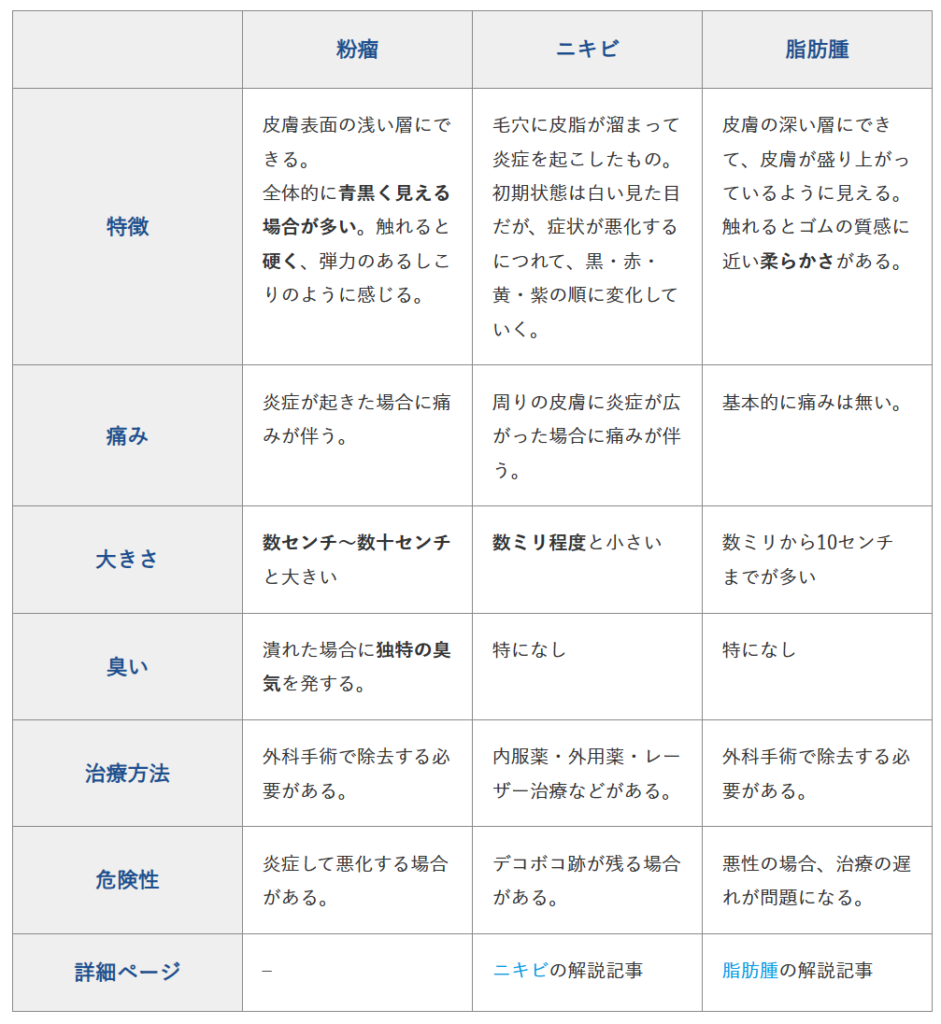
🔍 Key points to help distinguish an epidermoid cyst:

✅ Check the color of the skin over the affected area and how it feels to the touch!

If the area has a bluish-black discoloration overall, or feels like a firm, elastic lump, there is a possibility it may be an epidermoid cyst 👆

👉 For more information on how to distinguish an epidermoid cyst:
・How to Tell Apart an Epidermoid Cyst, Acne, and a Lipoma | Features and Differences Explained by a Specialist
・Can You Self-Check for an Epidermoid Cyst? Differences from Similar Conditions and When to See a Doctor
・Causes and Treatment of Fatty Lumps on the Face | Symptoms and Treatment by Type, Explained by a Specialist
🤷 Is It Safe to Leave an Epidermoid Cyst Untreated? Can It Heal on Its Own?
Unfortunately, epidermoid cysts do not heal on their own 😢
Because the cause is not fully understood, there is no established method of prevention.
General health measures — such as stress management, moderate exercise, adequate sleep, and a balanced diet — are thought to be helpful for similar conditions such as acne, but…
⚠️ Even with these measures in place, it is unlikely that an epidermoid cyst will disappear on its own.
👨⚕️ We recommend considering proper treatment for the cyst!
👉 Will an Epidermoid Cyst Go Away on Its Own? The Risks of Leaving It Untreated and the Right Treatment Options, Explained by a Specialist
🏥 “Think It Might Be an Epidermoid Cyst?” Feel Free to Consult IC Clinic Ueno
💬 "I checked myself but I'm not quite sure…"
💬 "It might just be acne, so it's probably not worth getting checked out…"

→ Even in these cases, please don't hesitate to reach out to IC Clinic Ueno ✨

IC Clinic aims to be a welcoming clinic for patients of all ages and backgrounds.

📌 Key features of epidermoid cyst surgery at our clinic:
✅ Covered by national health insurance, so you can feel at ease about the cost 💰
✅ The procedure takes under 20 minutes in most cases ⏱️
✅ Same-day surgery is available 🚶

👉 Which Department Should I Visit for an Epidermoid Cyst? Symptoms, Treatments, and Prevention Explained in Detail by a Specialist
🚨 【Warning!】 Do Not Try to Pop an Epidermoid Cyst Yourself
💬 "It's only a small cyst — is it okay to pop it myself…?"
We do receive questions like this from patients, but please never attempt to drain or pop a cyst on your own [14,15]!
⚠️ Why is this dangerous?
Attempting to pop or squeeze a cyst can allow bacteria to enter, potentially triggering an infection that may cause it to grow to two or three times its original size very quickly, leading to inflammation and pain 😱
Furthermore:
❌ The cyst sac can become adhered to surrounding tissue
❌ The scar becomes more difficult to fade over time
❌ If left untreated, the cyst will continue to grow year by year
👨⚕️ We recommend seeking treatment at a medical clinic sooner rather than later!
👉 For more information:
・Why Popping an Epidermoid Cyst Yourself Is Dangerous — The Right Knowledge and Proper Treatment
・Is "Removing an Epidermoid Cyst Yourself" (as Seen on Q&A Sites) Dangerous? The Right Knowledge and Proper Treatment
😰 A Case: A Patient Who Attempted to Remove His Own Cyst with a Needle
One patient who came to our clinic had attempted to remove an epidermoid cyst himself using a needle.
The self-treatment was unsuccessful, and the wound from the needle became a pathway for infection, causing the condition to worsen 😢
He ultimately came to our clinic for surgery, but the self-treatment had left scarring that could not be avoided, which he deeply regretted.
⚠️ When proper curative surgery has not been performed, the cyst sac remains beneath the skin.
This means the cyst can continue to fill with keratin and sebum, growing larger over time, or — if infected — may repeatedly become red, swollen, and painful, or discharge pus.
👨⚕️ To avoid scarring and prevent the situation from worsening, please refrain from self-treatment and seek evaluation at a medical clinic first!
✨ Curative Treatment Requires Surgical Removal of the Cyst
To achieve a definitive cure, the epidermoid cyst itself must be surgically removed.
This is because epidermoid cysts rarely resolve on their own, and incision and drainage alone will not eliminate the cyst sac — leaving the possibility of recurrence [2].
👨⚕️ It is therefore necessary to visit a medical clinic and undergo surgery to remove the cyst.
Since an epidermoid cyst is a benign tumor, the decision of whether to have it removed is ultimately yours to make.
However, leaving it untreated may lead to inflammation or further growth, so surgical removal is generally advisable once the cyst has reached several centimeters in size.
💊 Is Medication Effective for Treating Epidermoid Cysts?
One important thing to understand is that when surgery has not been performed, treatment typically involves antibiotics.
For inflamed cysts in particular, oral antibiotics are usually prescribed first and taken for several days to help reduce the inflammation.
⚠️ An important note, however:
While the pain may subside after taking antibiotics, this simply means the infection has been brought under control — it does not mean the tumor itself has been removed.
Medication can help manage the infection, but relying on medication alone means there is a risk of the bacterial infection recurring at a later stage.
❌ Topical ointments sometimes mentioned in personal blogs, or over-the-counter products marketed to draw out pus, are also not recommended approaches.
Even if symptoms appear to improve temporarily, the cyst sac remains inside the skin, meaning the epidermoid cyst has not been fully treated [3,4].
👨⚕️ As mentioned above, surgical removal at a medical clinic is necessary to achieve a definitive cure for an epidermoid cyst.
👉 Is Medication Effective for Epidermoid Cysts? Treatment Options and the Right Course of Action, Explained by a Specialist
📍 Common Locations Where Epidermoid Cysts Develop
Epidermoid cysts can develop on many different parts of the body. Symptoms and treatment considerations may vary depending on the location. If you have concerns about a specific area, please refer to the relevant articles below.

🔹 Head and Face
・A Complete Guide to Epidermoid Cysts on the Head (Atheroma) — Causes, Symptoms, and Treatment
・Understanding Epidermoid Cysts on the Face: A Complete Guide to Symptoms, Causes, and Treatment
・What You Should Know About Epidermoid Cysts Around the Eyes | Symptoms, Causes, and Treatment Explained in Detail
・A Complete Guide to Epidermoid Cysts Behind the Ear — Symptoms, Causes, and Treatment

🔹 Upper Body
・A Complete Guide to Epidermoid Cysts on the Back (Atheroma): Symptoms, Causes, and Treatment
・Which Department Should I Visit for an Epidermoid Cyst on the Chest? Symptoms, Treatment, and Important Points Explained in Detail
・Epidermoid Cysts in the Underarm (Axilla): Symptoms, Causes, and Treatment Explained in Detail
・Lumps Under the Arm | Causes, Symptoms, and Treatment Explained by a Physician
・Symptoms, Causes, and Treatment of Epidermoid Cysts on the Hands Explained in Detail
・Why Does a Lump on the Arm Hurt When Pressed? Characteristics by Symptom and the Right Course of Action

🔹 Lower Body
・What Is an Epidermoid Cyst on the Thigh? Symptoms, Causes, and Treatment Explained in Detail
・Epidermoid Cysts in the Groin: Everything You Need to Know from Causes to Treatment
・About Epidermoid Cysts in the Inguinal Region | Causes, Symptoms, and Treatment Explained in Detail

🔹 Sensitive Areas
・What You Should Know About Epidermoid Cysts in the Genital Area — Symptoms, Causes, and Treatment Explained in Detail
・What You Should Know About Epidermoid Cysts on the Scrotum — Symptoms, Causes, and Treatment Explained in Detail
・About Epidermoid Cysts on the Penis | Symptoms, Causes, and Treatment Explained in Detail
・Epidermoid Cysts on the Labia Minora: Symptoms, Causes, and Treatment
・Epidermoid Cysts Near the Anus: Symptoms, Causes, and Treatment Explained in Detail
・Is Epidermoid Cyst Surgery on the Buttocks Painful? A Detailed Look at the Reality of Pain and How to Manage It
⚡ Concerning Symptoms Associated with Epidermoid Cysts
Epidermoid cysts can present with a variety of concerning symptoms, including pain, odor, and dark discoloration. We have prepared detailed articles on each of these symptoms.

🔹 If you are experiencing pain
・What to Do and What to Watch Out For When an Epidermoid Cyst Is Painful
・Can't Sleep Due to Epidermoid Cyst Pain? Managing Inflammation and Knowing When to Seek Treatment

🔹 If you are concerned about odor
・Should You Be Concerned About the Odor from an Epidermoid Cyst? Causes and How to Address It

🔹 If you have dark discoloration
・For Those Concerned About Dark Discoloration from an Epidermoid Cyst: A Complete Guide from Causes to Treatment

🔹 If you want to know what's inside
・What Is Inside an Epidermoid Cyst? Everything You Need to Know About Symptoms, Treatment, and Prevention
🔄 Epidermoid Cysts (Atheromas) Are Prone to Recurrence
Epidermoid cysts are a troublesome condition because they tend to recur 😓

⚠️ The following aspects make treatment particularly challenging:

❌ Even at clinics that can examine the condition, surgery may not always be performed
❌ Treatment at a clinic may end with antibiotics alone
❌ Even when antibiotic treatment provides temporary improvement, the cyst may recur

When surgical removal has not been carried out, the cyst sac remains beneath the skin.

This means the cyst can continue to fill with keratin and sebum, growing over time, or — if infected — may repeatedly become red, swollen, painful, or discharge pus.

That said, even after curative surgical removal, the cyst sac may unfortunately remain in some cases. This risk is higher for patients who underwent surgery after the cyst had already become inflamed (inflamed epidermoid cyst).

The degree of infection plays a role: when a cyst becomes infected and produces pus, the sac can weaken and rupture, or partially dissolve, making it difficult to remove all remnants completely.

While performing a wide-excision surgery can reduce the risk of recurrence by removing scattered cyst remnants more thoroughly, the resulting larger scar may not always be a desirable outcome from a cosmetic standpoint.

✨ If you are particularly concerned about minimizing scarring from an epidermoid cyst, please consult IC Clinic. We will discuss treatment options that aim to reduce visible scarring as much as possible.

👉 A Complete Guide to Treating Epidermoid Cysts with Minimal Scarring | Scar-Reducing Techniques and the Latest Treatments
📋 5 Things to Know Before Having Epidermoid Cyst Surgery
So far, we have covered the characteristics of epidermoid cysts, how to distinguish them from other conditions, and the risks of attempting self-treatment.

Next, for those who are thinking "If I have an epidermoid cyst, I'd like to have it surgically removed," here are five things you should know before undergoing surgery 👇

📌 The five topics are as follows:

(1)⏱️ How long does the surgery take?
(2)✂️ Two surgical methods: "fusiform excision" and "punch excision (enucleation)"
(3)💰 Cost of surgery
(4)🚶 Minimal impact on daily life after surgery
(5)✨ Will there be scarring after surgery?

These are important points to understand as you consider moving forward with treatment.
Let's go through each one!

👉 For those who would like to learn more about surgery:
・What You Should Know About Epidermoid Cyst Surgery Complications — A Complete Guide to Safe and Reliable Treatment
・Key Points to Know Before Epidermoid Cyst Surgery So You Have No Regrets
⏱️(1) How Long Does the Surgery Take?
For small cysts of a few millimeters in size, the procedure can often be completed in as little as 5 minutes, allowing same-day surgery right after your consultation ✨

For larger cysts, an appointment may be scheduled after the initial consultation, with surgery performed on a separate day.

🏥 At IC Clinic, even for larger cysts, we aim to complete surgery within approximately 20 minutes.

👉 Can an Epidermoid Cyst Be Treated on the Same Day? The Benefits and Key Considerations of Same-Day Treatment

✂️(2) Two Surgical Methods: “Fusiform Excision” and “Punch Excision (Enucleation)”
There are two surgical approaches for epidermoid cysts: "fusiform excision" and "punch excision" [11,12,16,17].
With safety and thorough treatment as the primary priorities, the most appropriate method is selected from these two options.
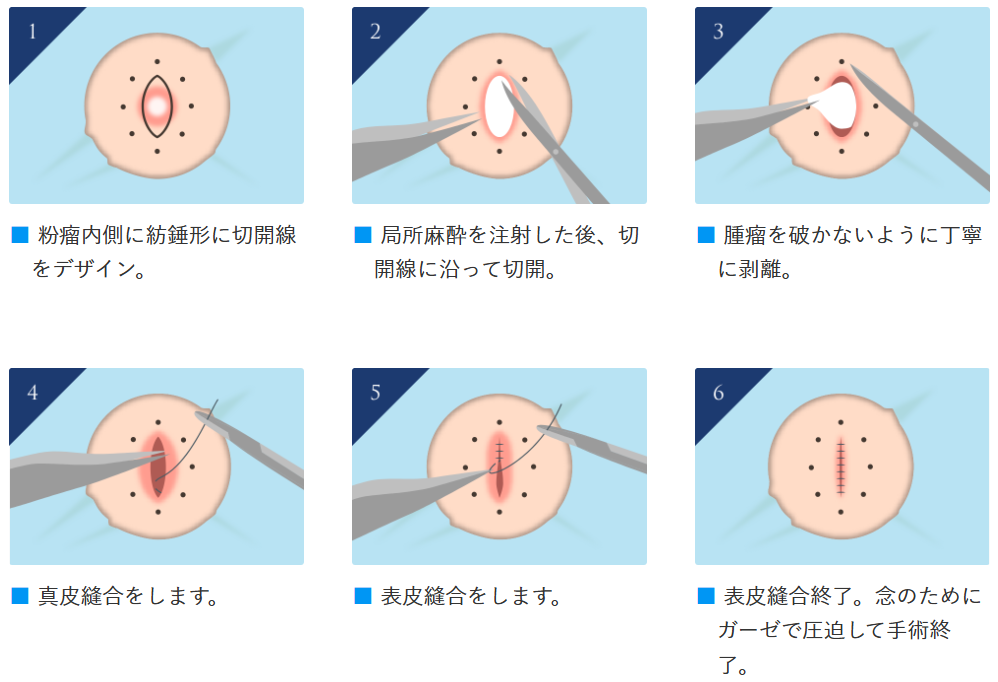
Fusiform excision is the most commonly used surgical method for epidermoid cysts.

It involves making a spindle-shaped incision in the skin, removing the cyst, and then closing the wound with sutures — a straightforward surgical approach.

✨ With careful suturing, the scar often becomes less noticeable over time.

For larger cysts or inflamed epidermoid cysts, this method tends to result in a better postoperative course than attempting punch excision.

👇 The surgical procedure is as follows:
Punch excision is a technique in which a small hole is made in the cyst using a specialized punch tool, the contents of the cyst are expressed through the opening, and the collapsed cyst sac is then removed.

✨ With this technique, scarring after the procedure tends to be minimal.

Patients who wish to minimize scarring and achieve the cleanest possible result often choose punch excision.

👉 What Is the Punch Excision Technique for Epidermoid Cysts? A Complete Guide to This Same-Day, Minimal-Scar Treatment
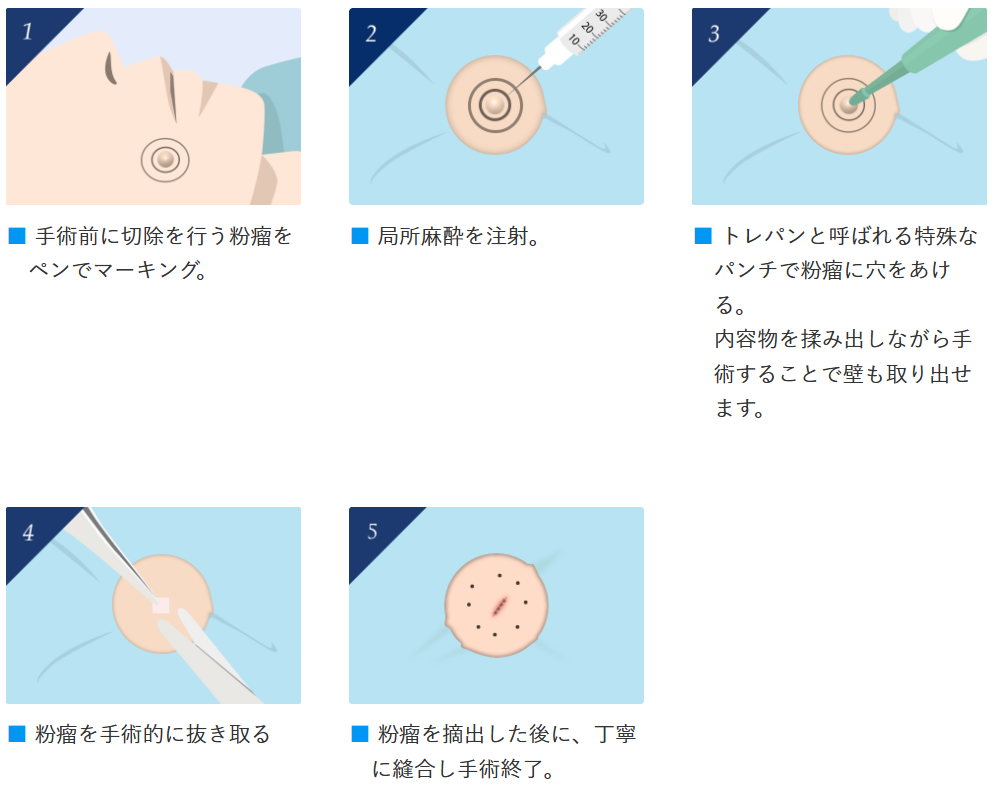
🏥 At IC Clinic, we recommend punch excision where it is appropriate for the patient's condition.

Of course, if fusiform excision is considered the better approach based on the patient's individual circumstances, we will prioritize that method. Our goal is to perform surgery using the approach that is most suitable for each patient.

✅ For standard epidermoid cysts, same-day surgery is available.

⚠️ For cysts with extensive inflammation, we may first perform a punch excision-based procedure on the day of the visit to address the inflammation and pain, then schedule a separate date for definitive surgery — depending on the severity of the condition and to help reduce the risk of recurrence.
💰(3) Cost of Epidermoid Cyst Surgery
Please be assured that diagnosis, examination, surgery, and pathological testing for epidermoid cysts are all covered by national health insurance ✨

👇 The costs for treatment at IC Clinic are as follows:
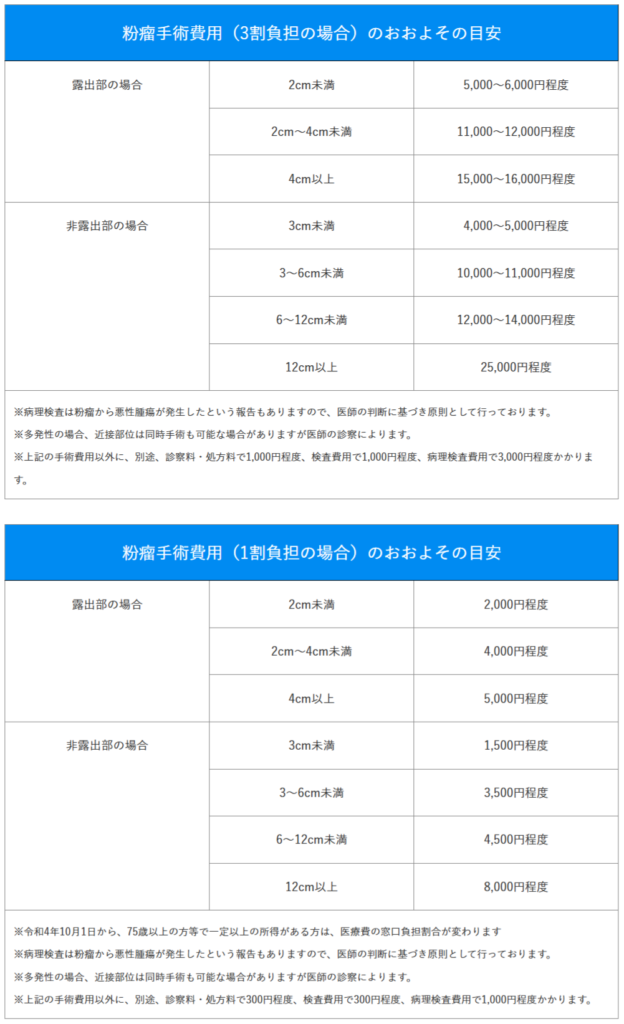
👉 For more information on costs:
・A Complete Guide to the Cost of Epidermoid Cyst Surgery | From Insurance Coverage to Choosing the Right Procedure
・A Detailed Breakdown of Epidermoid Cyst Surgery Costs — Tips for Keeping Costs Down and What to Watch Out For [IC Clinic Ueno]
💵 Can Private Life Insurance Cover Epidermoid Cyst Surgery?
If you are enrolled in a private medical insurance plan or mutual aid association and undergo surgery covered by national health insurance following a physician's examination, you may be eligible to receive a surgery benefit payment 💰

⚠️ Even if you have life insurance, benefits will not be paid unless you submit a claim yourself.

📝 If a physician's written statement is required, please let us know at the time of your consultation.

Please check with your private insurer or mutual aid association for details. (The procedure may be listed under a name such as "skin and subcutaneous tumor excision.")
🚶(4) Minimal Impact on Daily Life After Surgery
After epidermoid cyst surgery, suture removal is generally not required ✨

📌 Important points after surgery:

⚠️ Due to the risk of bleeding, it is advisable to avoid alcohol and strenuous exercise on the day of surgery and the following day.

After that, you may generally return to your normal routine as directed by your physician. (However, for cysts located near joints, a longer period of rest may be required depending on the size.)

🛁 Regarding bathing:
❌ Please avoid soaking in a bath on the day of surgery due to the risk of bleeding.
✅ From the following day onward, you may shower and gently wash the wound with soap.
⚠️ To maintain cleanliness, we ask that you avoid baths and swimming pools for approximately one week, using the shower only during this time.
✨(5) Scarring After Epidermoid Cyst Surgery
For cysts of a few centimeters in size, the scar often becomes less noticeable over time ✨

For very large cysts measuring several tens of centimeters, there is a possibility that a more visible scar may remain.

It is natural to hope for minimal scarring and the cleanest possible result after surgery.

✨ There are approaches that aim to minimize scarring, so if visible scarring is a concern for you, please be sure to discuss this with us at your consultation!

👉 A Complete Guide to Treating Epidermoid Cysts with Minimal Scarring | Scar-Reducing Techniques and the Latest Treatments
⚠️ Watch Out for These Issues at Insurance-Covered Clinics!
Did you know? Even for the same insurance-covered tumor (skin lesion) surgery, the cost can vary by approximately 7,000–10,000 yen depending on the clinic.
The cost of insurance-covered tumor surgery is determined by the physician’s assessment of the size of the tumor (skin lesion). Furthermore, the final determination of tumor size should be made after surgery, based on the actual size of the removed specimen.
Unfortunately, some insurance-covered clinics appear to determine the tumor size based solely on the physician’s pre-operative judgment without applying clear measurement criteria, which can result in higher surgical costs being presented to patients.
We have seen a number of cases where patients who had been assessed at other clinics were re-measured at our clinic using clear measurement criteria, and the tumor was classified as the smallest size category — “exposed area under 2 cm (or non-exposed area under 3 cm)” — resulting in a reduction in out-of-pocket costs of 7,000–10,000 yen.
We are deeply concerned about this situation and feel it is important to raise awareness on this matter.
If you are receiving treatment for an epidermoid cyst or similar condition at another clinic, please pay particular attention to the following.
⚠️ The surgical cost is being calculated as “exposed area 2 cm or more (or non-exposed area 3 cm or more)”
If the tumor (skin lesion) turns out to be smaller than estimated before surgery, you may end up paying approximately 6,000 yen in unnecessary costs.
We therefore recommend confirming the size of the tumor (skin lesion) and the expected cost before surgery. You may ask your physician: “Will today’s surgery be billed at the lowest cost tier?”
You also have the right as a patient to request verification after surgery. Please feel free to ask your physician: “Could you show me the size of the removed specimen to confirm it was truly 2 cm or more (or 3 cm or more for a non-exposed area)?”
This is especially important when inflammation makes the tumor appear larger than it actually is. The area of inflammation and the actual size of the tumor are not the same, so it is important that the removed specimen be accurately measured.
⚠️ Points to Consider Regarding Clinical Care Structure
Safety in medicine comes not from any single physician’s skill alone, but from the support of a well-organized clinical team.
In surgery and postoperative management, having multiple professional perspectives available and a system in place to respond promptly to unexpected developments is what determines the level of safety.
In a small-team practice, even the most experienced physician may face limitations in being prepared for unexpected situations or in providing continuous follow-up care.
We believe that the quality of medical care should be ensured not through individual capability alone, but through the design of a strong organizational support structure.
🏥 Our Clinic Is Structured to Give Patients Peace of Mind
IC Clinic has a team of multiple physicians and operates under the following in-clinic guidelines to minimize the financial burden on our patients.
- Surgery is billed at the lowest cost tier — “exposed area under 2 cm (or non-exposed area under 3 cm)” — as a standard.
- In cases where the cost falls under “exposed area 2 cm or more (or non-exposed area 3 cm or more),” we take photographs of the tumor before and after surgery and retain them in order to ensure rigorous size assessment. These photographs can be shared with patients upon request.
🏥 If You Are Anxious About Epidermoid Cyst Treatment, Please Consult IC Clinic Ueno

If you have any concerns about an epidermoid cyst, please feel free to consult IC Clinic Ueno ✨

⚠️ When a cyst worsens and becomes inflamed, it not only extends the treatment period but can also place a significant emotional burden on the patient.

There is also a greater chance of scarring after treatment at that stage, which is why we encourage you to come in for a consultation as soon as you notice something that may be an epidermoid cyst.

🏥 At our clinic, we offer:
✅ Treatment approaches tailored to each patient's condition, aiming to minimize discomfort
✅ Suggestions for treatment methods that aim to reduce the likelihood of visible scarring
✅ A commitment to listening carefully to each patient's concerns and worries, and supporting you through your treatment journey together

👉 For guidance on choosing a clinic and physician:
・How to Choose a Skilled Physician for Epidermoid Cyst Surgery | A Complete Guide to Avoiding a Poor Outcome
・The Benefits of Choosing a Female Physician for Epidermoid Cyst Treatment — What Female Patients Should Know
・Top 10 Recommended Clinics for Epidermoid Cyst Treatment in Ueno | Affordable, Skilled, and Insurance-Covered Options
・What You Should Know Before Seeking Epidermoid Cyst Treatment in Tokyo — How to Find a Skilled Physician and Everything About Treatment
📰 Epidermoid Cyst Topics
Epidermoid cysts are a common condition experienced by many people. Some public figures have also spoken openly about having them.

👉 What Is the "Epidermoid Cyst" That Celebrities Like Minami Tanaka, Koji Kato, and Hirohide Yakumaru Have Spoken About? Symptoms and Treatment Explained

🔹 For those visiting from the Akihabara area
・For Those Concerned About Epidermoid Cysts in the Akihabara Area | Causes, Symptoms, and Treatment Explained in Detail by a Dermatologist

🔹 For those concerned about skin lumps
・What You Should Know About Skin Lumps and Epidermoid Cyst Clinics | For Those Seeking the Right Treatment in Ueno
📚 Evidence Based on Clinical Research
Our treatment approach is based on the following domestic and international clinical studies [11,12,13,16,17,23,24].
📖 References
Basic Disease Information and Pathophysiology
- Japanese Dermatological Association, ed. Dermatology, 11th Edition. Bunkodo, 2018.
- Zito PM, Scharf R. Epidermoid Cyst. In: StatPearls [Internet]. Treasure Island (FL): StatPearls Publishing; 2023.
- Japanese Dermatological Association. “Clinical Practice Guidelines for Benign Skin Tumors,” 2015.
- Weedon D. Weedon’s Skin Pathology, 4th Edition. Churchill Livingstone Elsevier, 2016.
- Morgan MB, Stevens GL, Somach S, Tannenbaum M. Sebaceous cysts: a clinicopathologic and immunohistochemical study of 106 cases. Am J Dermatopathol. 2001;23(5):394-401.
- Nigam JS, Bharti JN, Nair V, et al. Epidermal cysts: A clinicopathological analysis with emphasis on unusual findings. Int J Trichology. 2017;9(3):108-112.
- Hoang VT, Trinh CT, Nguyen CH, et al. Overview of epidermoid cyst. Eur J Radiol Open. 2019;6:291-301.
- Japanese Society of Plastic and Reconstructive Surgery, ed. Plastic Surgery, 4th Edition. Kokuseido Publishing, 2017.
Diagnosis and Differential Diagnosis
- Lee HE, Yang CH, Chen CH, et al. Comparison of ultrasound and clinical examinations in the differential diagnosis of superficial soft tissue masses. Ultrasonography. 2018;37(3):216-221.
- Singal A, Bisherwal K. Sebaceous cyst: Though simple but rare. J Cutan Aesthet Surg. 2019;12(1):19-24.
Treatment Methods and Surgical Techniques
- Chiu ES, Hogg NJ, Lohman RF, et al. Small epidermoid cysts of the palm: the importance of complete excision. J Hand Surg Am. 2004;29(6):1018-1021.
- Park JH, Park YJ, Kim WS. Treatment of epidermal cyst using CO2 laser-assisted wide excision. Dermatol Surg. 2001;27(12):1063-1066.
- Nakamura M, Adachi Y, Muto Y, et al. Comparison of techniques for epidermoid cyst removal: conventional surgical excision versus minimal excision. J Dermatol. 2015;42(1):63-67.
Complications and Infection Management
- Madan V, August PJ, Chalmers RJ. Treatment of multiple epidermoid cysts with CO2 laser and delayed healing. Clin Exp Dermatol. 2010;35(4):e82-e84.
- Horn T, Kazakevich N, Geronemus R. Treatment of epidermoid cysts with the Er:YAG laser. Dermatol Surg. 2004;30(4):503-508.
References on Punch Excision
- Klin B, Ashkenazi H. Sebaceous cyst excision with minimal surgery. Am Fam Physician. 1990;41(6):1746-1748.
- Zuber TJ. Minimal excision technique for epidermoid (sebaceous) cysts. Am Fam Physician. 2002;65(7):1409-1412, 1417-1418.
Histopathology and Malignant Transformation
- Patel GA, Schwartz RA. Epidermoid cyst (epidermal inclusion cyst). Cutis. 2015;95(6):E21-E25.
- Luba MC, Bangs SA, Mohler AM, Stulberg DL. Common benign skin tumors. Am Fam Physician. 2003;67(4):729-738.
Epidermoid Cysts in Children
- Torrelo A, Zambrano A, Happle R. Cutaneous findings in the scalp of healthy newborns. Pediatr Dermatol. 2005;22(1):39-42.
Epidermoid Cysts at Special Locations
- Kim JH, Park SW, Roh MR. Epidermoid cysts of the skin: A comprehensive review. Ann Dermatol. 2016;28(4):462-470.
- Mohta A, Sharma M, Nischal KC. Scrotal epidermoid cysts in children. Pediatr Surg Int. 2006;22(8):707-709.
Recurrence Prevention and Long-Term Prognosis
- Dufresne RG, Garrett AB, Bailin PL, Ratz JL. Carbon dioxide laser treatment of epidermoid cysts. J Am Acad Dermatol. 1989;21(4 Pt 1):726-728.
- Moore RB, Fagan EB, Hulkower S, et al. Clinical inquiries. What’s the best treatment for sebaceous cysts? J Fam Pract. 2007;56(4):315-316.
Domestic Guidelines and Reviews
- Japanese Dermatological Association. Clinical Practice Guidelines for Malignant Skin Tumors, 3rd Edition. Kanehara Publishing, 2019.
- Harii K, Hashimoto K, eds. NEW Dermatology, 3rd Edition. Nakayama Shoten, 2018.