

✅ Types and characteristics of moles
✅ When treatment may be covered by health insurance
✅ Available treatment options
✅ Approximate treatment costs
⚠️ Don’t miss this important information…
Some moles may indicate malignant tumors (cancer).
Early detection and prompt treatment are essential!
“My mole has been gradually getting larger and I’m not sure what to do…”
“Can moles on my face be removed cleanly?“
👇 We can help you with these concerns at our clinic!

A mole (pigmented nevus) is generally an acquired condition. An acquired pigmented nevus is not present from birth; rather, it refers to a state in which nevus cells (which resemble pigment cells) have proliferated in or beneath the skin during the course of growth.
Acquired pigmented nevi are typically classified into:
📌 ① Unna Nevus
📌 ② Miescher Nevus
📌 ③ Spitz Nevus
📌 ④ Clark Nevus
💡 For more information about moles, please see the following articles:
- 📖 Why Do Moles Grow Larger? Warning Signs and Treatment Options
- 📖 Why Moles Increase: Age-Related Changes and Signs to Watch For
- 📖 Moles That Suddenly Appear on the Palm: Causes and What to Do
- 📖 Can Moles Disappear on Their Own? The Mechanisms and Medical Approaches
📍 ① Unna Nevus

📊 These most commonly appear on the trunk of the body. They are typically around 1 cm in diameter and have a soft, nodular texture. The color is often black to dark brown.
📍 ② Miescher Nevus

📊 These most commonly appear on the face and scalp. They are often dome-shaped, and may have hair growing from them. With age, they can fade and become closer to skin tone.
👉 Are Raised Moles Dangerous? Causes, Types, and Treatment Explained by a Specialist
📍 ③ Spitz Nevus
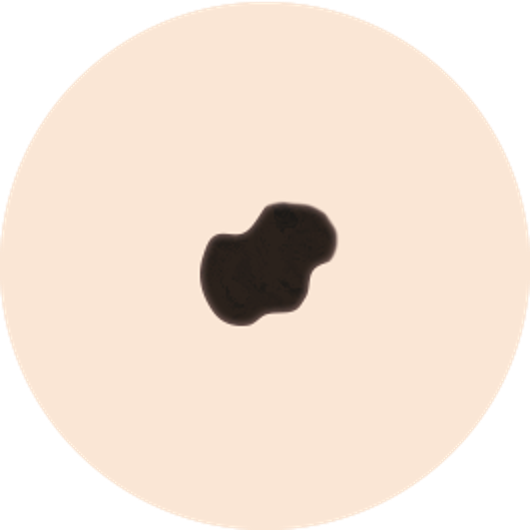
📊 These tend to develop in relatively younger individuals. The color is often red to black. ⚠️ In rare cases, they can enlarge rapidly, making it necessary to distinguish them from skin cancer (malignant melanoma).
👉 How to Distinguish Malignant Melanoma from a Mole
📍 ④ Clark Nevus
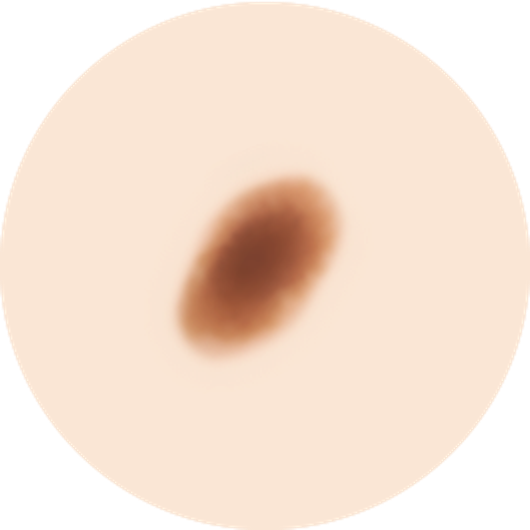
📊 These most commonly appear on the trunk and limbs. They are often oval in shape, with a slightly darker center that gradually fades toward the edges. They are generally less than 1 cm in diameter.
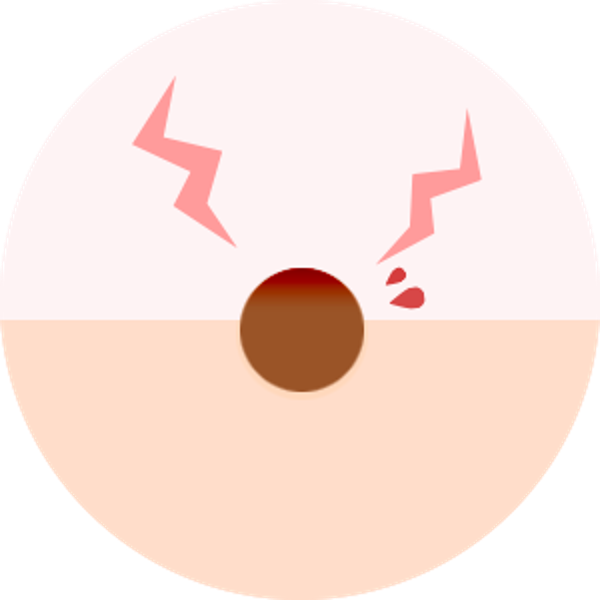
Moles can sometimes cause problems in daily life or health concerns, such as:
- 👁️ Obstructing the field of vision when located on the eyelid
- 🪒 Catching on a razor during shaving
- 👔 Catching on clothing when dressing or undressing
- 💧 Bleeding when a fingernail catches on the area while washing the face
- ⚠️ The possibility of malignancy
💡 For more information about mole symptoms, please see:
When moles cause symptoms such as those described above, surgical treatment under the national health insurance system may be applicable.
⚠️ Please note: If the purpose is purely cosmetic, treatment will not be covered by insurance and will be an out-of-pocket expense.
👉 For details, please see “Conditions for Insurance-Covered Mole Removal“.
This condition can resemble a mole and commonly occurs on the hands and feet. It is a firm, nodule-like skin tumor that is black to brown in color. It may develop following an insect bite or some form of skin injury.
This is a benign skin tumor arising from peripheral nerves. It is also known to occur in multiple numbers in neurofibromatosis type 1 (von Recklinghausen disease). It can also occur as a solitary lesion and may need to be differentiated from a Miescher nevus.
Commonly found in areas prone to friction, such as the neck, underarms, and groin. It is a skin-colored, wart-like raised lesion that gradually increases with age and friction. Small ones that develop around the neck are sometimes called acrochordons.
This condition commonly develops in middle age and beyond, and is seen in almost all individuals aged 60 and older. Caused by UV exposure and aging, it involves the hardening of the skin surface, forming raised, brownish, spot-like lesions. It often appears on the face, temples, and around the neck, as it commonly develops on areas exposed to sunlight (sun-exposed areas).
This is one of the most frequently occurring skin cancers, commonly developing on the face. As it can resemble a mole, careful differentiation—including consideration of skin biopsy—is important. Complete surgical excision is necessary, and in some cases, referral to a general hospital or university hospital may be required.
This is a form of skin cancer that is prone to metastasis and can be life-threatening. It is important to begin treatment promptly upon diagnosis. It frequently develops on the soles of the feet. If this condition is diagnosed, we will arrange a prompt referral to a university hospital or cancer center.
For information on how to distinguish moles from skin cancer, please refer to the following articles:
- 📖 How to Identify a Dangerous Mole – Early Detection of Skin Cancer with Photos
- 📖 The Relationship Between Moles and Skin Cancer
- 📖 How to Distinguish Moles on the Foot from Melanoma
- 📖 Checking for Dangerous Moles on the Back
- 📖 Moles on the Head and Their Relationship to Cancer
- 📖 How to Distinguish Moles on the Palm from Cancer
Based on the size and location of the mole, the most appropriate treatment method is selected under the guidance of a physician certified by the Japanese Society of Plastic and Reconstructive Surgery.
For surgical treatment at our clinic, we follow a plastic surgery approach: incisions are made along the natural skin creases, followed by dermal suturing (deep layer closure using absorbable sutures beneath the skin) and epidermal suturing.
- 👉 Mole Treatment at a Plastic Surgery Clinic
- 👉 Plastic Surgery Approaches to Mole Removal
- 👉 Plastic Surgery Treatment for Pigmented Nevi
- 👉 Mole and Wart Surgery at a Dermatology Clinic
- 👉 Approximate Cost of Laser Treatment
- 👉 Risks and Precautions for Mole Removal
- 👉 How to Avoid Regrets After Mole Removal
- 👉 Points to Note About Over-the-Counter Products (e.g., Ibokorori)
At IC Clinic Ueno, we are committed to achieving aesthetically refined, inconspicuous scarring in all of our treatments.
🧵 We use sutures finer than a strand of hair to perform precise and meticulous closures.
👨⚕️ The most appropriate technique is selected from a wide range of surgical methods under the guidance of a physician certified by the Japanese Society of Plastic and Reconstructive Surgery.
⭐ Mole surgery performed by physicians with extensive clinical experience.
※ Patients travel from across Japan—including Tohoku and Okinawa—to receive treatment at our clinic.
💊 We aim not only for clean scarring, but also to minimize discomfort throughout the treatment process.
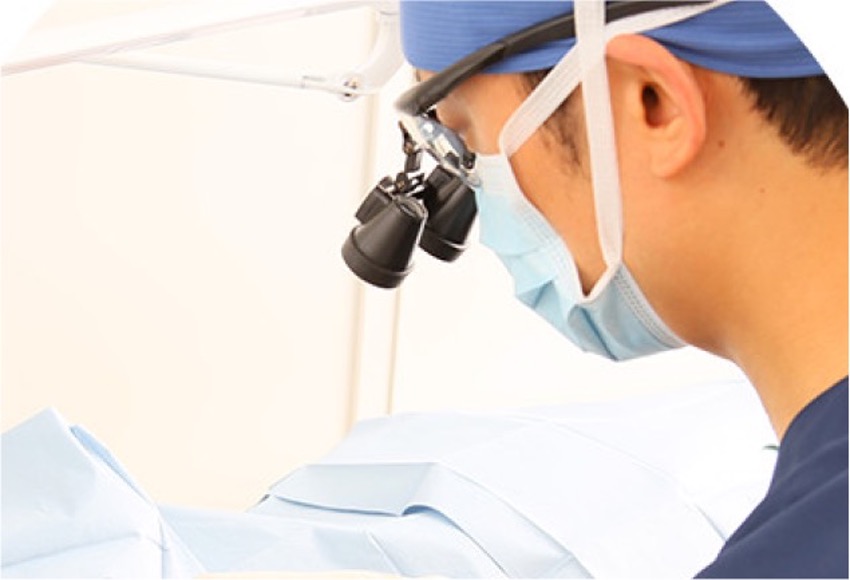

💬 We begin with a consultation.
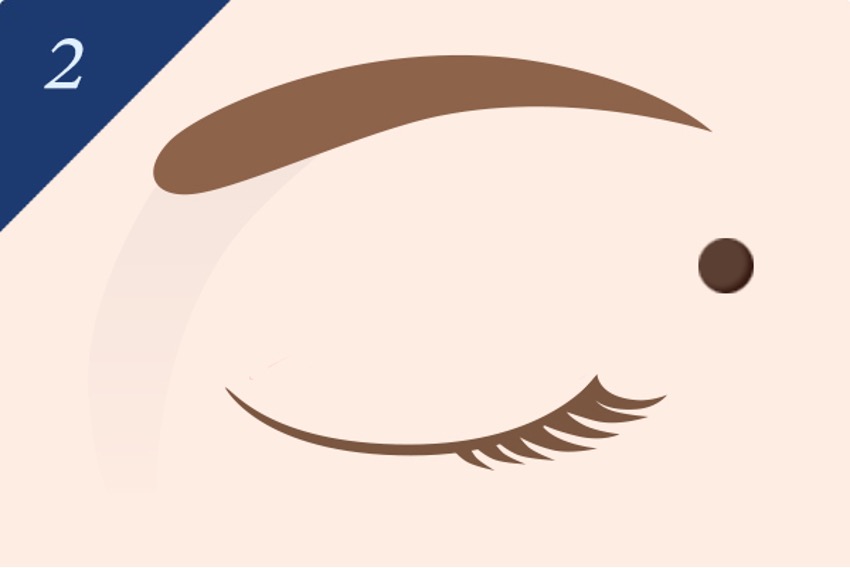
🔍 A physician examines the mole to assess for any signs of malignancy.
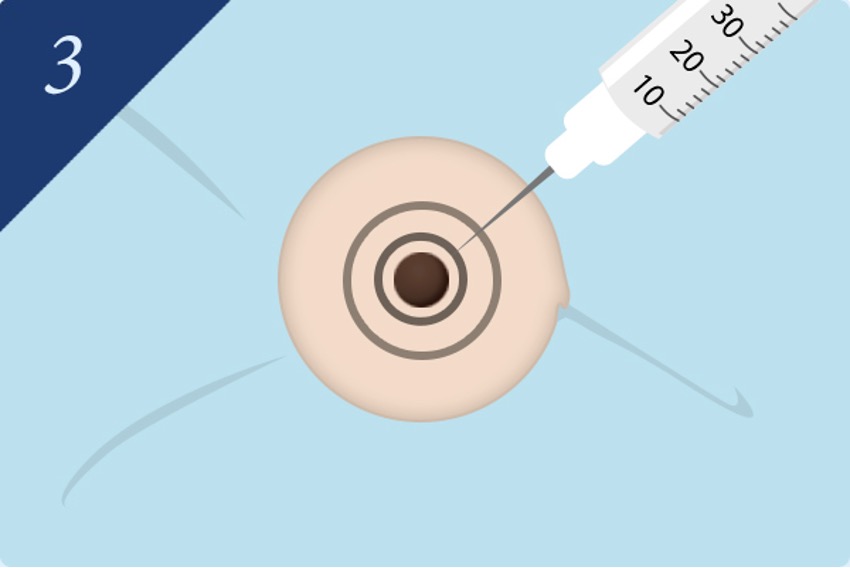
💉 Local anesthesia is administered before the procedure begins.
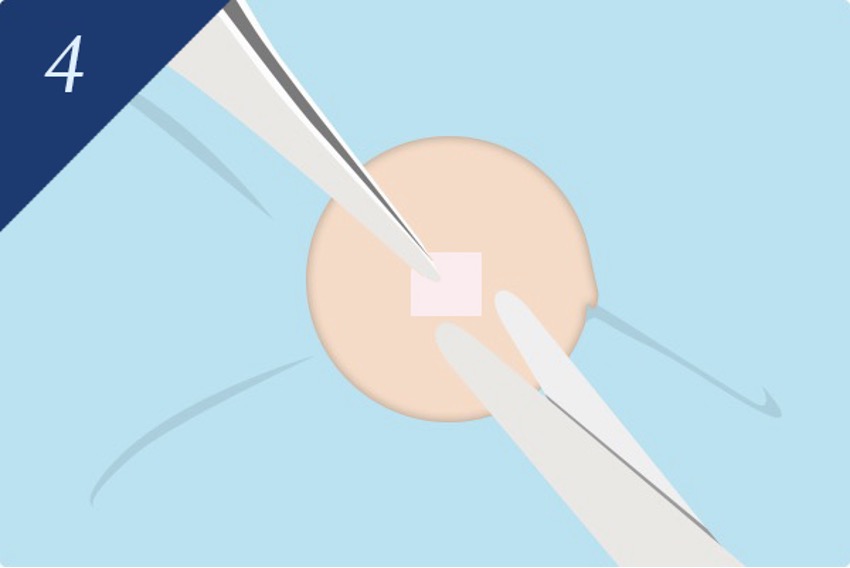
🩹 Ointment is applied and the wound is protected with gauze or a bandage.
👨⚕️ Our physician and nursing staff will provide detailed instructions on post-operative wound care.

📅 Suture removal is scheduled approximately 1–2 weeks after surgery.
| Approximate Guide to Mole Surgery Costs | ||
| 📍 Exposed areas | Approx. ¥5,000–¥15,000 (at 30% patient co-payment) ※Consultation and examination fees are charged separately. |
|
| 📍 Non-exposed areas | Approx. ¥4,000–¥13,000 (at 30% patient co-payment) ※Consultation and examination fees are charged separately. |
|
| ⚠️ Pathological examination is performed as a general rule at the physician’s discretion, as malignant tumors arising from moles have been reported in the literature. 💡 Fees vary within the ranges above depending on the location and size of the mole. 💡 Non-exposed areas such as the trunk, upper arms, and thighs are priced lower than exposed areas. 💡 In cases of multiple moles, simultaneous surgery on adjacent sites may be possible in some cases, subject to the physician’s assessment. 💡 In addition to the surgery fees listed above, approximate additional costs include: consultation and prescription fees of around ¥1,000, examination fees of around ¥1,000, and pathological examination fees of around ¥3,000. |
||
💰 Surgical Insurance Benefits
If you are enrolled in a private medical insurance plan or mutual aid association, you may be eligible to claim a surgical benefit if you receive surgery under the national health insurance system following a physician’s diagnosis.
⚠️ Important: Even if you hold a life insurance policy, benefits will not be paid unless you submit a claim yourself.
📝 If a physician’s written diagnosis is required, please be sure to inform us at the time of your consultation.
💡 Please check with your life insurance company or mutual aid association for details.
(The procedure name will typically be listed as “Excision of Skin and Subcutaneous Tumor” or similar.)
👨⚕️ Surgery is performed as a team by dermatologists and plastic surgeons under the guidance of a physician certified by the Japanese Society of Plastic and Reconstructive Surgery.
💊 The most appropriate method is selected from a wide range of surgical techniques under the guidance of a certified plastic surgeon, with the aim of providing treatment with minimal discomfort.
✨ We pay close attention to suturing technique and thread selection, aiming to keep scarring to a minimum.
💰 Mole surgery at our clinic may be covered under the national health insurance system, helping to keep costs manageable.
⏰ We aim to complete procedures within 20 minutes. For smaller moles, surgery can often be completed in around 5 minutes.
🚇 We are conveniently located just a 1-minute walk from JR Ueno Station.
- 👩 Those who want moles in visible areas—such as the face or neck—treated as cleanly as possible
- 💼 Busy professionals who have difficulty setting aside extended time for treatment
- ✨ Women who place a high priority on the quality of post-treatment results
Moles can be removed cleanly under the national health insurance system!
Moles can develop on various parts of the body. Treatment methods and considerations differ depending on the location. Please refer to the articles below for more detail.
Based on the size and location of the mole, the most appropriate treatment method is selected under the guidance of a physician certified by the Japanese Society of Plastic and Reconstructive Surgery. At our clinic, we offer treatment using CO2 (carbon dioxide) laser or high-frequency electrosurgery (radiofrequency scalpel).
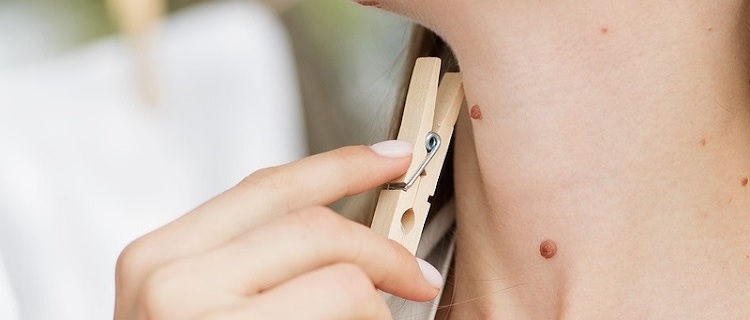
CO2 laser treatment is used to remove moles, skin tags (acrochordons), raised pigmented spots, and similar lesions. It has minimal impact on the surrounding skin, and because the dermis is preserved at the treated site, scarring tends to be less noticeable. It may also be helpful for acne and acne scarring.
✅ Although a laser is used, discomfort during treatment is typically mild, and the post-treatment impact on daily life is generally small, making it a relatively straightforward procedure.
✅ Recovery also tends to be faster than with surgical excision using a scalpel.
✅ Treatment can be applied not only to the face, but also to the décolletage (neck to chest), the back, and other areas of the body.
🎯 Who May Benefit from CO2 Laser Treatment
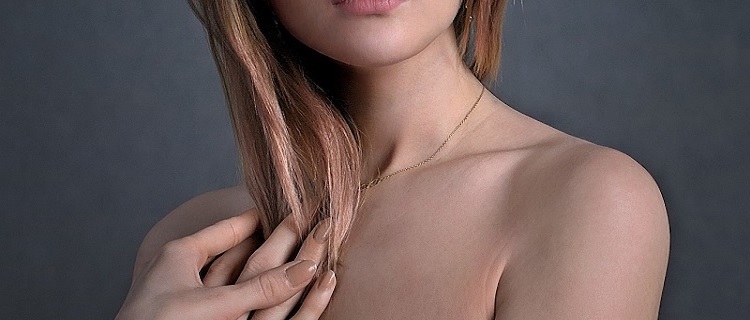
- 😊 Those bothered by moles, warts, or pigmented spots
- ✨ Those who wish to minimize the impact on surrounding skin
- 💊 Those who find treatments involving significant discomfort difficult
CO2 laser treatment can address a wide range of skin concerns, including moles, warts, pigmented spots, acne, and acne scars. As it tends to have minimal impact on surrounding skin and leaves less noticeable scarring, it may be a suitable option for those concerned about the effect of treatment on their skin.
At our clinic, local anesthesia is administered before CO2 laser treatment, helping to reduce discomfort during the procedure.
*For insurance-covered treatment, we follow a plastic surgery approach: incisions are made along the natural skin creases, followed by dermal suturing (deep layer closure using absorbable sutures beneath the skin) and epidermal suturing.
The risk of a common mole becoming cancerous is generally the same as for other areas of skin. Proper diagnosis of any mole is important.
Warts and moles can typically be removed in a single surgical procedure. Suture removal is required approximately 1–2 weeks afterward.
Insurance coverage may apply when the mole is causing symptoms, such as:
✅ Obstructing the field of vision when located on the eyelid
✅ Catching on a razor during shaving
✅ Catching on clothing when dressing or undressing
✅ Bleeding when a fingernail catches the area while washing the face
In such cases, treatment may be covered by health insurance.
⚠️ If the purpose is purely cosmetic, insurance does not apply and costs will be an out-of-pocket expense.
Removal is possible in many cases. Please consult with our physician at your first visit for an assessment.
Local anesthesia is used, so you should not feel pain during the procedure. There may be some mild discomfort when the anesthetic is injected. We use ultra-fine needles and aim to minimize discomfort throughout.
After mole treatment, a minor scar will remain. Eliminating scarring entirely is not possible; our focus is on minimizing the appearance of scars as much as we can.
Each mole is generally treated in a single procedure. If the number of moles is very large, treatment may be divided into multiple sessions. For insurance-covered treatment, one site per session is the general rule.
It is advisable to avoid both for at least 3 days after surgery. If possible, refraining for approximately one week is preferable.
Showering is permitted from the day after surgery. Soaking in a bathtub is best avoided until after suture removal.
It is important to keep the wound clean and use taping to reduce tension on the wound, as well as to protect the area from UV exposure.
We aim to excise the mole so that it does not recur; however, as we perform minimal excision, recurrence is possible in rare cases. If you suspect the mole may have recurred, please return for a follow-up consultation with one of our physicians.
📸 Case Studies at Our Clinic
✨ [Case Study] Male Patient in His 50s: CO2 Laser Treatment for a Facial Mole (Updated 3 August 2025)
This patient was a male in his 50s who visited IC Clinic Ueno hoping to have a mole on his cheek that had bothered him for many years removed for cosmetic reasons. Following examination, the mole was diagnosed as a benign pigmented nevus, and CO2 (carbon dioxide) laser treatment was performed. The procedure was carried out under local anesthesia and completed in a short time, safely and precisely removing the mole. Some redness was present immediately after treatment, but as time passed the skin recovered smoothly, and the area now has a natural appearance.
![[Case Study] Male Patient in His 50s: CO2 Laser Treatment for a Facial Mole (Updated 3 August 2025)](https://ic-clinic-ueno.com/wp-content/uploads/2025/08/IMG_9626.png)
![[Case Study] Male Patient in His 50s: CO2 Laser Treatment for a Facial Mole (Updated 3 August 2025)](https://ic-clinic-ueno.com/wp-content/uploads/2025/08/IMG_9629.png)